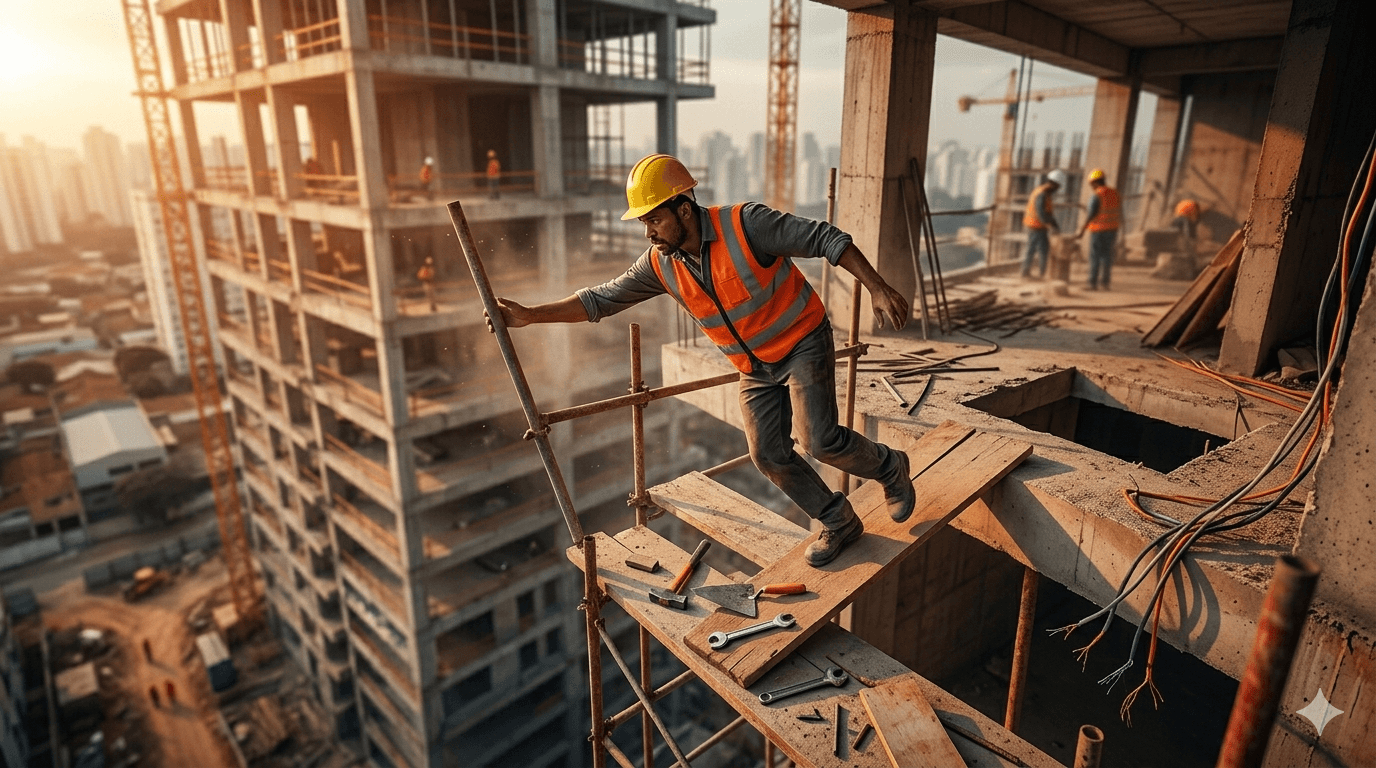
If you work in construction, engineering, maintenance, or property management, this content can literally prevent accidents and save lives.
🚨 Why are accidents still so common in construction?
Even with standards and regulations, the sector still faces:
-
Lack of continuous inspection
-
Execution without adequate technical supervision
-
Improvisations on site
-
Pressure regarding deadlines and costs
And, mainly:
👉 basic mistakes being neglected
⚠️ 1. Lack of fall protection (NR-18 ignored)
💥 What happens in practice
Common situations:
-
Scaffolding without guardrails
-
Absence of lifelines
-
Workers at height without protection
👉 This is one of the main causes of serious and fatal accidents.
🧠 Real example
A worker climbs to adjust a structure on the third floor.
Without a safety harness.
One slip.
Result: serious fall.
✅ How to avoid
-
Install guardrails and safety nets
-
Use lifelines
-
Ensure mandatory PPE usage
-
Train teams for working at height
⚠️ 2. Poorly executed or improvised structures
💥 What happens in practice
-
Concrete pouring outside standard
-
Use of unsuitable materials
-
Lack of technical supervision
👉 This can cause structural collapses.
🧠 Real example
A newly poured slab is loaded before the ideal curing time.
Result:
-
cracks
-
partial collapse
-
risk for everyone on site
✅ How to avoid
-
Strictly follow the structural project
-
Respect concrete curing times
-
Have supervision by a responsible engineer
-
Never improvise materials or solutions
⚠️ 3. Irregular electrical installations
💥 What happens in practice
-
Exposed wires
-
Improvised connections
-
Lack of grounding
👉 Direct risk of electric shock and fire.
🧠 Real example
Equipment is connected to an improvised extension.
Short circuit.
Fire quickly starts on the site.
✅ How to avoid
-
Follow technical standards (NBR 5410)
-
Avoid "jerry-rigs"
-
Use appropriate electrical panels
-
Conduct periodic inspections
⚠️ 4. Lack of signage and organization on site
💥 What happens in practice
-
Materials scattered
-
Risk areas unidentified
-
Lack of circulation control
👉 Increases risk of falls, run-overs, and collisions.
🧠 Real example
A visitor enters the site without guidance.
Does not notice a floor opening.
Direct fall.
✅ How to avoid
-
Implement clear signage
-
Organize flow of people and materials
-
Isolate dangerous areas
-
Keep the site clean and organized
⚠️ 5. Lack of planning and control of the construction
💥 What happens in practice
-
Teams working without alignment
-
Incompatible simultaneous activities
-
Lack of risk management
👉 This generates indirect but very frequent accidents.
🧠 Real example
While a team works at height, another circulates below without protection.
Tools fall.
Serious accident.
✅ How to avoid
-
Detailed planning of activities
-
Use of well-defined schedules
-
Control of risk areas
-
Clear communication among teams
🧠 What do all these mistakes have in common?
They are not complex.
They are avoidable.
And almost always involve:
👉 lack of planning
👉 lack of control
👉 lack of information
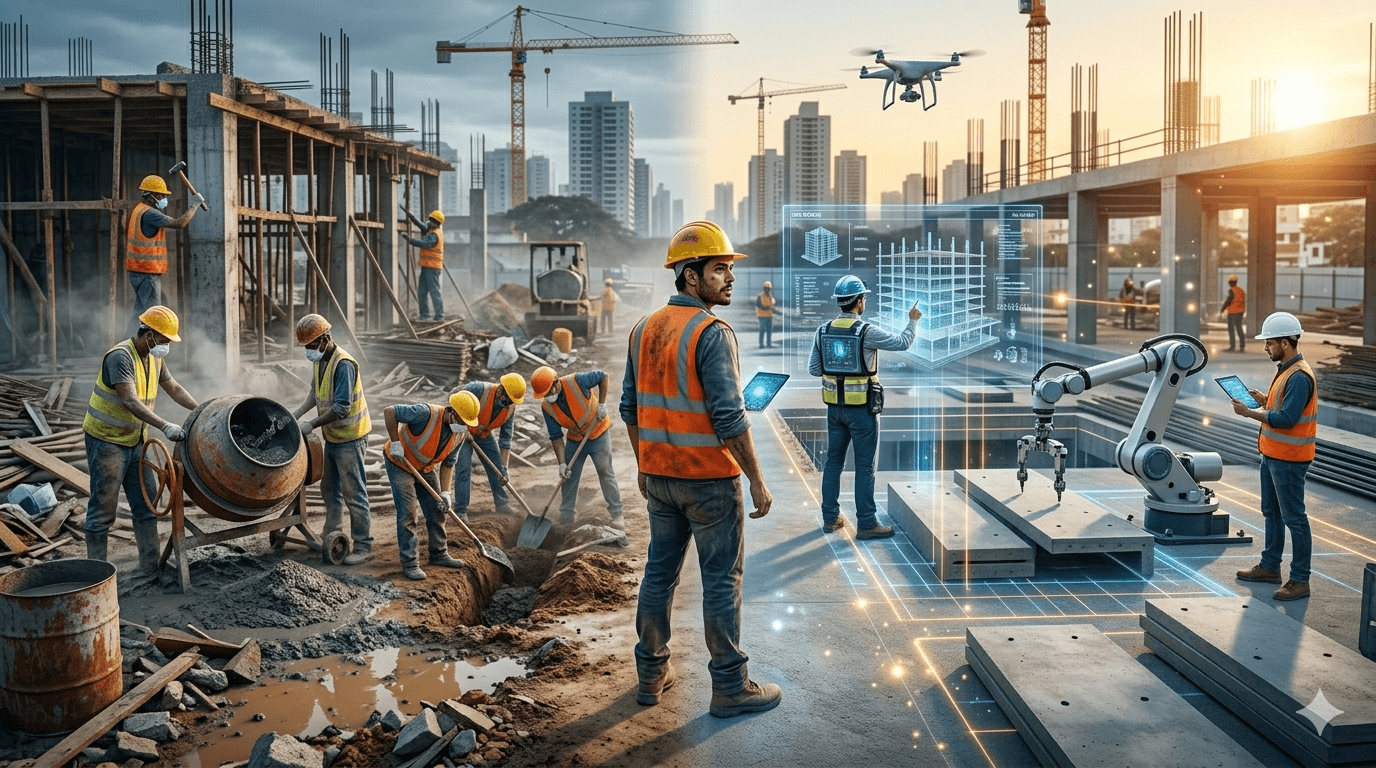
🚀 How technology can reduce accidents
Today there are already solutions that help avoid these mistakes:
-
📊 BIM → simulates risks before execution
-
📡 IoT → monitors conditions in real time
-
📋 Digital systems → control processes and safety
-
📈 Real-time data → enable preventive action
The trend is clear:
👉 safer constructions are more controlled constructions
⚠️ Safety is not a cost — it is protection
Many still see safety as an expense.
But in practice:
-
accidents cost more
-
rework costs more
-
stoppages cost more
Not to mention the most important:
👉 lives
✅ Conclusion: small mistakes, big consequences
Most serious accidents start with something small:
-
a protection that was not installed
-
a procedure ignored
-
a decision made on the spur of the moment
Avoiding this does not require advanced technology.
It requires awareness.
🔎 Final reflection
If you critically analyzed your site today...
👉 how many of these mistakes would you find?
📚 Sources and references
-
Good safety practices in civil construction (NR-18 and Brazilian technical standards)
-
Orientation Guide: Use of I4.0 Technologies and BIM in Construction Management — Programa Construa Brasil
-
Principles of management, control, and risk reduction in construction based on digitization and continuous monitoring