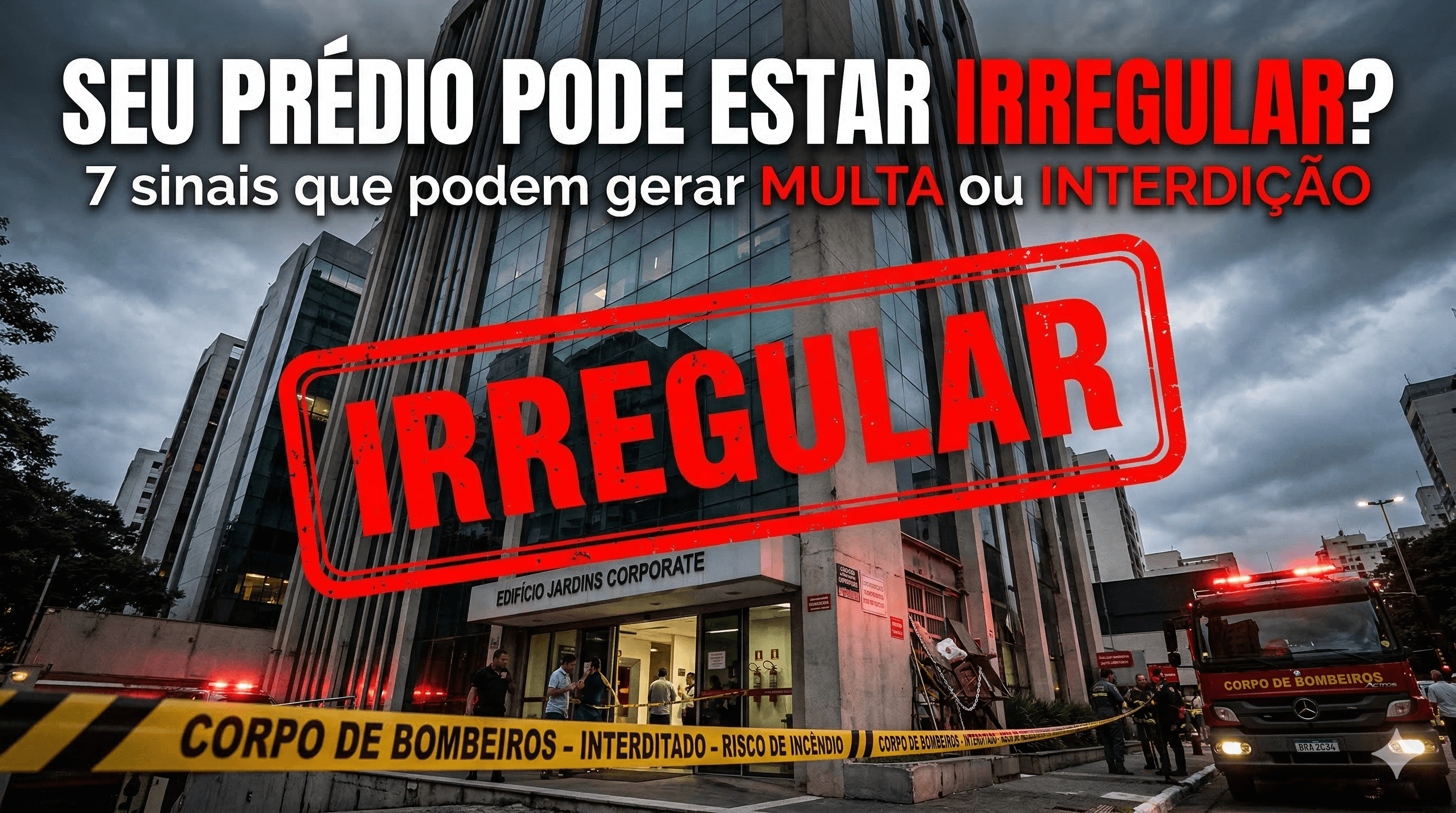
If you are an owner, building manager, administrator, or entrepreneur, this content can save you a huge loss.
🔥 What is AVCB and why is it so important?
AVCB is the document that proves a building complies with fire safety regulations.
Without it, the property:
-
❌ Is non-compliant with the law
-
❌ Can be fined at any time
-
❌ Faces risk of immediate closure
-
❌ May have insurance invalidated
-
❌ Puts lives at risk
⚠️ 7 signs your building may be non-compliant
Stay alert. These signs are common — and often ignored.
1. 🚪 Lack of emergency signage
If you do not see signs indicating:
-
Emergency exits
-
Escape routes
-
Fire extinguishers
👉 This is a serious warning.
Signage is mandatory and essential in panic situations.
2. 🧯 Expired or missing fire extinguishers
Check:
-
Expiration date
-
Pressurization
-
Accessibility
An expired extinguisher is considered non-existent by inspections.
3. 💡 Emergency lighting not functioning
In case of power failure:
- The building must remain lit along escape routes
If this does not happen, the risk is immediate.
4. 🚧 Emergency exits blocked
Locked doors, objects blocking the way, or difficult access:
👉 This is extremely serious.
During an evacuation, seconds make the difference between life and death.
5. 🔥 Lack of alarm or fire detection system
Depending on the type of property, it is mandatory to have:
-
Smoke detectors
-
Audible alarms
Without these, a fire can spread before any reaction.
6. 📄 Expired or missing AVCB
Even if the building previously had an AVCB:
⚠️ It has an expiration date.
If expired, the property is again considered non-compliant.
7. 🏢 Renovations or changes without project update
Changed layout? Created new rooms? Altered the structure?
👉 The AVCB needs to be updated.
Any modification can invalidate previous approval.
🚫 What can happen to a non-compliant building?
Many only worry when the problem arises.
But when it does… it's already too late.
Consequences include:
-
💸 Heavy fines
-
🚫 Immediate closure of the property
-
⚖️ Civil and criminal liability
-
🔒 Loss of operating license
-
📉 Financial and reputational damage
🧠 Why are so many buildings non-compliant?
Simple: lack of information + negligence.
Many believe:
-
“It will never cause a problem”
-
“No one inspects”
-
“I’ll deal with it later”
Until it happens.
✅ How to regularize your property
If you identified any of the above signs, the way forward is:
-
Conduct a technical diagnosis of the building
-
Adapt the property to safety standards
-
Prepare or update the technical project
-
Request inspection from the Fire Department
-
Obtain a valid AVCB
📌 Conclusion: ignoring it can be costly (or worse)
Regularization is not just a legal requirement.
It is a matter of:
-
Safety
-
Responsibility
-
Awareness
If you have read this far, you are ahead of most.
Now the question is:
👉 Will you wait for a problem to occur, or act beforehand?
🔎 Final tip
If you have doubts about your property's condition, it is worth seeking a specialized technical evaluation.
In many cases, small adjustments can prevent major losses.